
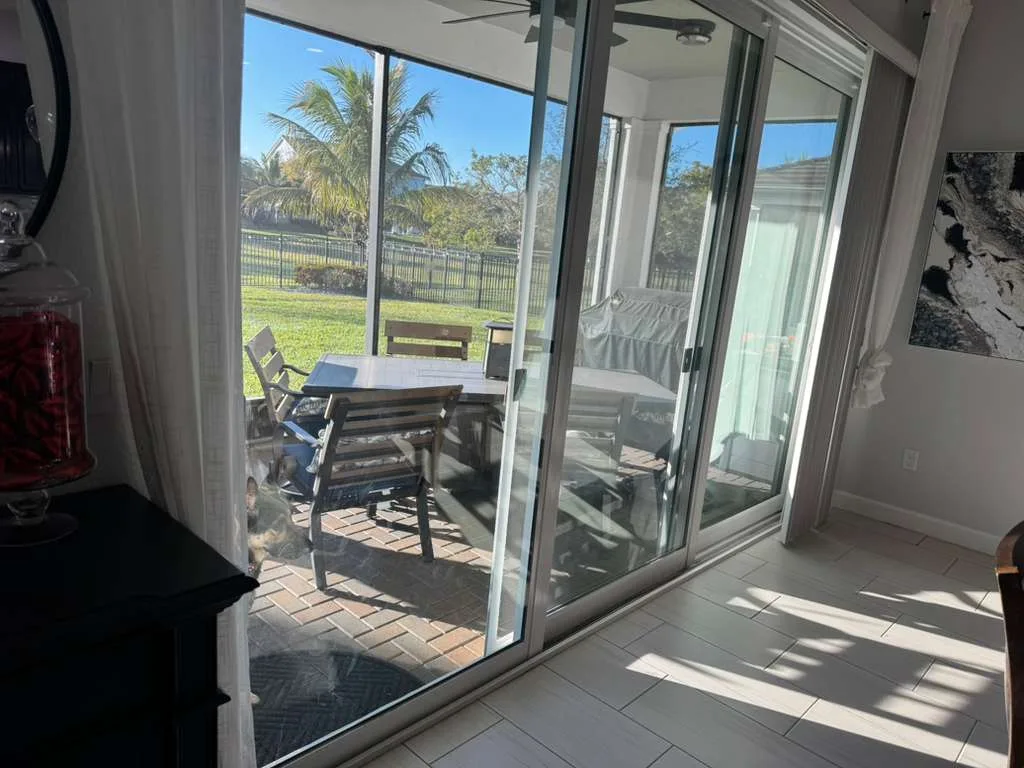
The very first question almost everyone asks before booking a sliding door repair is simple: how long is this going to take? It is a fair thing to want to know. Nobody wants a tech parked in their living room all day, and nobody wants to hand off a door, wait a week, and live with a hole in the wall. The honest answer is that roller work is usually faster than you would think. Let us break it down by job size, walk through what a visit actually looks like minute by minute, and be straight about the things that can stretch the clock.
The short version for a single panel
A standard single-panel roller swap, where the door comes off cleanly and the track underneath is in decent shape, is genuinely a 1 to 2 hour job for an experienced tech. That is start to finish: lift the panel out, pull the old rollers, set the new ones in, drop the panel back, adjust the height so it rolls level, and test it a bunch of times. You go from "this thing weighs 400 pounds" to gliding with a fingertip in about the length of a TV episode.
So yes, single panels are very often same-day, and frequently same-visit. A lot of people picture the door getting hauled away to a shop. For rollers, that almost never happens. The repair is done right there in your home.
For rollers, the door almost never leaves your house. The whole repair happens right there in the living room, usually inside a couple of hours.
Two panels and multi-panel doors
Two panels done together, the common patio-door setup, usually runs more like 2 to 3 hours. It is not double the time, because the tech is already set up, the tools are out, and the rhythm is going. But it is more lifting and more fine-tuning to get both panels rolling evenly and meeting in the middle the way they should.
Three-panel and big multi-panel impact doors are a different animal. Those panels are heavy, sometimes brutally so, and impact glass is no joke to maneuver. A job like that can stretch to half a day or longer, and on the biggest setups (think 3 to 9 panels) a two-person crew or a follow-up trip is not unusual. The upside: even those monsters get repaired for a fraction of a full replacement, which can run $10,000 to $15,000 installed. Paying to fix the rollers, even on a big door, is the obvious value play.
Clean removal, fresh rollers, height dialed in. Almost always same-visit.
The common patio setup. More lifting and fine-tuning, but one efficient session.
Heavy impact glass and 3 to 9 panels may need a two-person crew or a return trip.
What actually slows a job down
Here is the honest part. The clock stretches when reality gets messy:
The four things that add time
Seized or frozen panels. If the door has been stuck and grinding for years, the panel can be fused into the track with corrosion and gunk. Coaxing it out without cracking the tempered glass takes patience, and patience takes time.
The track is wrecked too. Rollers and track are a team. If the bottom track is bent, pitted, or worn flat, new rollers alone will not fix the glide, so the tech may need to clean and recap the track or run a full new track. That adds time, but it is why the repair actually lasts.
Concrete or structural work. Older homes sometimes have settling or concrete issues under the threshold. If the track sits in compromised concrete, that is extra labor.
Parts. Most common rollers are stocked and ready. But oddball, vintage (think 70s, 80s, and 90s doors), or specialty impact hardware sometimes has to be ordered, which can split the work into a measure-now, install-later visit.